ONLINE LEARNING
INTRODUCTION:

In the rapidly evolving landscape of education, online learning has emerged as a transformative force, reshaping the way we access, engage with, and deliver educational content. As technological advancements continue to accelerate and the demand for flexible, accessible learning options grows, online learning has become an increasingly integral component of the educational ecosystem.
Online learning, also known as e-learning or distance education, refers to the delivery of educational content and instruction via the internet or digital technologies. It encompasses a diverse array of learning modalities, ranging from synchronous virtual classrooms and interactive multimedia courses to self-paced modules and massive open online courses (MOOCs).
At its core, online learning transcends geographical barriers, time constraints, and traditional constraints of the classroom, offering learners the flexibility to pursue their educational goals on their own terms. Whether accessing course materials from the comfort of their homes, participating in live discussions with peers and instructors from across the globe, or completing assignments at their own pace, online learning empowers individuals to take control of their learning journey and customize their educational experiences to suit their needs and preferences.
The proliferation of online learning has been propelled by advances in technology, including high-speed internet connectivity, digital learning platforms, multimedia resources, and collaboration tools. These technological innovations have democratized access to education, making it more accessible and inclusive for learners of all ages, backgrounds, and circumstances.
Moreover, the COVID-19 pandemic has accelerated the adoption of online learning, prompting educational institutions worldwide to pivot to remote and hybrid learning models to ensure continuity of learning amidst unprecedented challenges. While the pandemic underscored the resilience and adaptability of online learning, it also revealed disparities in access to technology and digital literacy skills, highlighting the need for equitable and inclusive approaches to online education.
In this era of digital transformation, online learning holds immense promise to revolutionize education, expand access to quality learning opportunities, and empower individuals to thrive in an increasingly interconnected and knowledge-driven world. By embracing the principles of flexibility, accessibility, and innovation, online learning has the potential to catalyze a paradigm shift in education, fostering lifelong learning, empowering learners to realize their full potential, and driving positive social and economic change.
Types of Online Learning:
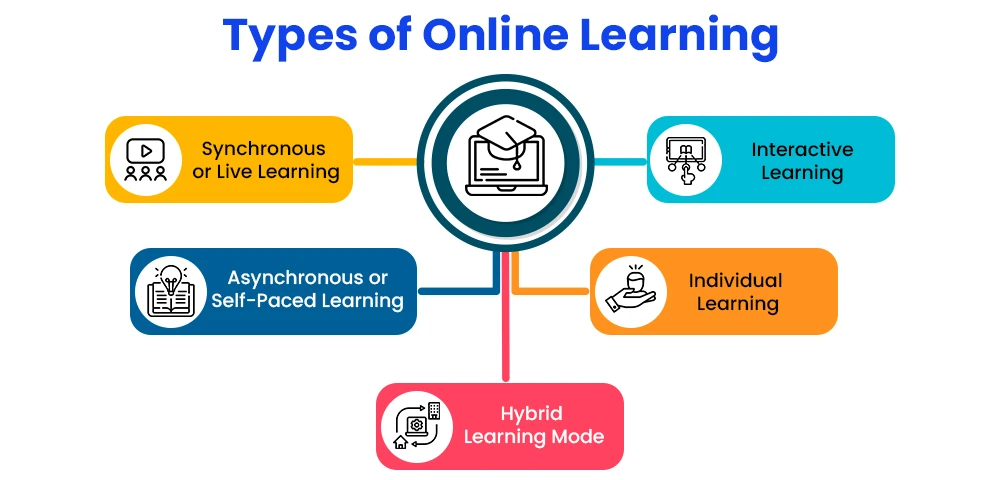
1. Synchronous Online Learning:
- In synchronous online learning, students and instructors engage in learning activities simultaneously in real-time. This mode of learning often involves live virtual classes, webinars, or video conferencing sessions where participants interact with each other and the instructor.
- Synchronous online learning offers opportunities for real-time communication, collaboration, and immediate feedback. Students can ask questions, participate in discussions, and engage in group activities as they would in a traditional classroom setting.
- Examples of synchronous online learning tools include Zoom, Microsoft Teams, Google Meet, and Adobe Connect.
2. Asynchronous Online Learning:
- Asynchronous online learning allows students to access course materials, lectures, and assignments at their own pace and convenience. There are no set meeting times, and students can engage with course content asynchronously, independently of the instructor or other students.
- In asynchronous online learning, course materials are typically pre-recorded and made available on learning management systems (LMS) or course websites. Students can access these resources at any time and from any location with an internet connection.
- Asynchronous learning provides flexibility for students with busy schedules or those in different time zones. It allows learners to review content multiple times, work at their own pace, and accommodate personal or professional commitments.
3. Blended Learning:
- Blended learning, also known as hybrid learning, combines elements of both face-to-face instruction and online learning. It integrates traditional classroom-based instruction with online activities, resources, and assessments to enhance the learning experience.
- In a blended learning environment, students may attend in-person classes for some sessions and engage in online learning activities for others. This flexible approach allows educators to optimize instructional time, provide personalized learning experiences, and leverage technology tools.
- Blended learning models vary in the degree of integration between online and face-to-face components. Some courses may have a 50/50 split between online and in-person instruction, while others may have a higher proportion of one mode of learning depending on instructional goals and learner needs.
4. Self-paced Online Courses:
- Self-paced online courses allow students to progress through course materials and assignments at their own speed, without strict deadlines or timelines. Learners have the flexibility to start, pause, and resume their studies as needed, making it suitable for diverse learning styles and preferences.
- In self-paced online courses, students typically have access to pre-recorded lectures, readings, quizzes, and assignments on an LMS or course platform. They can work through the content independently, revisiting topics as needed and completing assessments at their own pace.
- Self-paced online courses are well-suited for learners who require flexibility due to work, family, or other commitments. They offer the freedom to customize the learning experience and accommodate individual learning preferences and needs.
5. Massive Open Online Courses (MOOCs):
- MOOCs are large-scale online courses that are open to anyone with internet access, typically offered by universities, colleges, or online learning platforms. MOOCs cover a wide range of topics and disciplines, attracting learners from around the world.
- MOOCs feature pre-recorded video lectures, interactive quizzes, discussion forums, and assignments. They often incorporate elements of both synchronous and asynchronous learning, allowing students to engage with course content at their own pace while also participating in live webinars or virtual events.
- MOOCs offer free or low-cost access to high-quality educational content, making them accessible to a broad audience. Learners can enroll in MOOCs to explore new subjects, enhance their skills, or pursue professional development opportunities.
Benefits of Online Learning:
Online learning, also known as e-learning or distance education, offers a plethora of benefits that have revolutionized the educational landscape. Here are some of the key advantages of online learning:
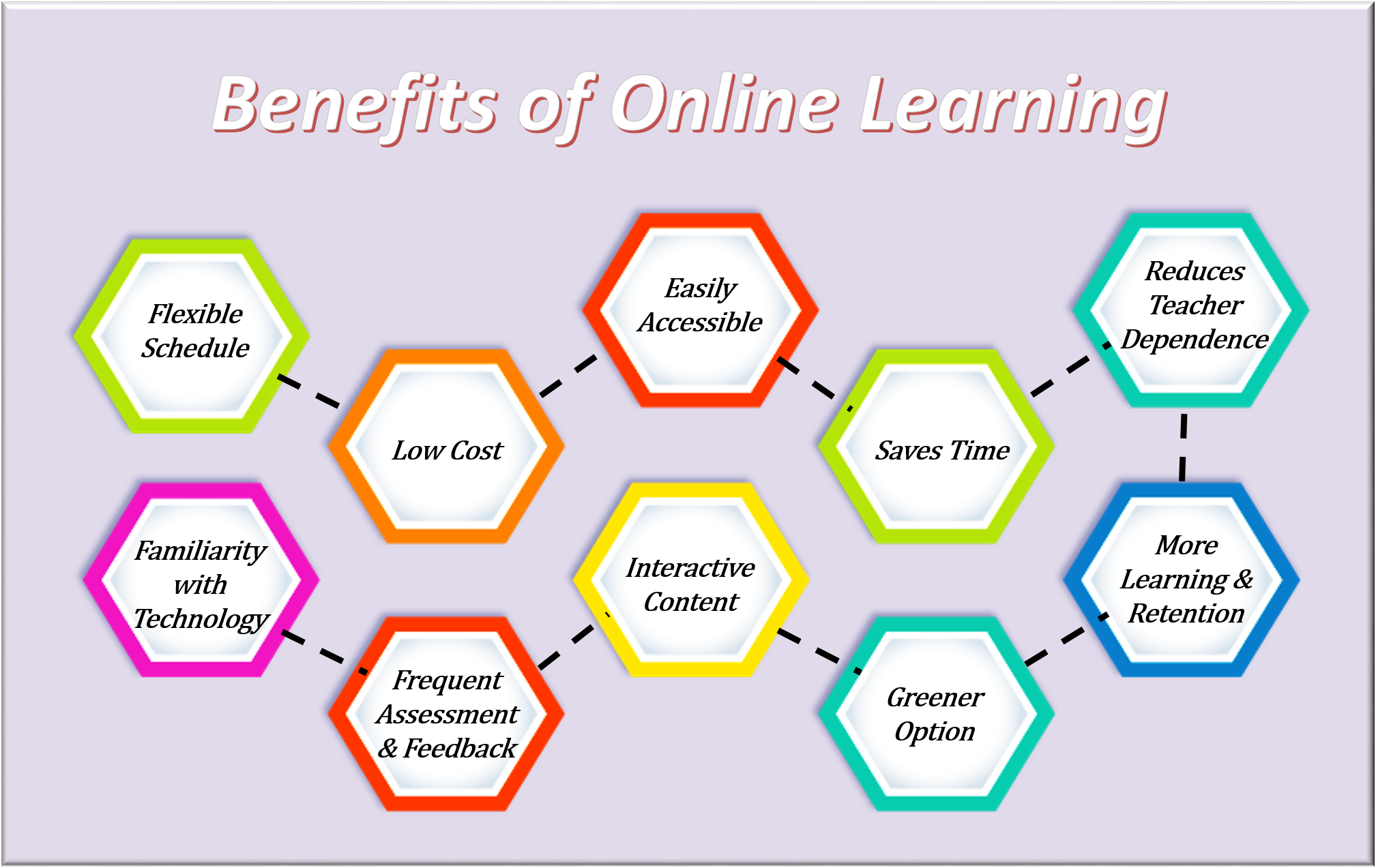
1. Flexibility and Convenience:
- One of the most significant benefits of online learning is its flexibility. Learners can access course materials, lectures, and assignments from anywhere with an internet connection, allowing them to study at their own pace and on their own schedule.
- Online learning eliminates the need for commuting to physical classrooms, saving time and expenses associated with travel. Learners can balance their studies with work, family responsibilities, or other commitments, making education more accessible and convenient.
2. Accessibility:
- Online learning transcends geographical barriers and provides access to education for learners who may not have access to traditional educational institutions due to factors such as location, disability, or scheduling constraints.
- Learners from diverse backgrounds, including working professionals, parents, individuals with disabilities, and those in remote or underserved areas, can benefit from online learning and pursue their educational goals.
3. Customization and Personalization:
- Online learning platforms often offer personalized learning experiences tailored to individual learner needs, preferences, and learning styles. Learners can choose from a variety of courses, modules, and resources that align with their interests, career goals, and prior knowledge.
- Adaptive learning technologies use algorithms to analyze learner data and provide targeted recommendations, adaptive assessments, and personalized feedback, enhancing the effectiveness and relevance of the learning experience.
4. Cost-Effectiveness:
- Online learning can be more cost-effective than traditional classroom-based education. It eliminates expenses associated with commuting, campus fees, textbooks, and accommodation, making education more affordable and accessible to a broader audience.
- Many online courses, including massive open online courses (MOOCs) and open educational resources (OER), are offered free of charge or at a lower cost, reducing financial barriers to education and enabling lifelong learning opportunities.
5. Diverse Learning Opportunities:
- Online learning offers a wide range of courses, programs, and learning resources across diverse subjects, disciplines, and levels of study. Learners can explore new topics, acquire new skills, and pursue professional development opportunities without geographical limitations.
- Online platforms host courses from leading universities, colleges, and educational institutions worldwide, providing access to high-quality educational content and expert instruction from renowned educators and subject matter experts.
6. Enhanced Engagement and Interaction:
- Contrary to common misconceptions, online learning fosters meaningful interaction and collaboration among learners and instructors. Discussion forums, virtual classrooms, and collaborative projects enable students to engage in discussions, share ideas, and collaborate on assignments.
- Online learning platforms often incorporate multimedia resources, interactive simulations, and gamified elements to enhance engagement and promote active learning. Real-time feedback, quizzes, and assessments provide opportunities for self-assessment and reflection, driving deeper learning and mastery of concepts.
7. Lifelong Learning Opportunities:
- Online learning facilitates lifelong learning by offering continuous opportunities for skill development, career advancement, and personal enrichment. Learners can access a diverse range of courses, workshops, and resources to stay abreast of new developments in their fields and adapt to changing job market demands.
- With the rapid pace of technological innovation and the evolving nature of industries, lifelong learning has become essential for staying competitive and agile in the workforce. Online learning equips learners with the knowledge, skills, and competencies needed to succeed in a dynamic and knowledge-driven economy.
Technologies and Tools for Online Learning:
Online learning relies on a variety of technologies and tools to deliver educational content, facilitate interactions, and enhance the learning experience. Here are some key technologies and tools commonly used in online learning environments:
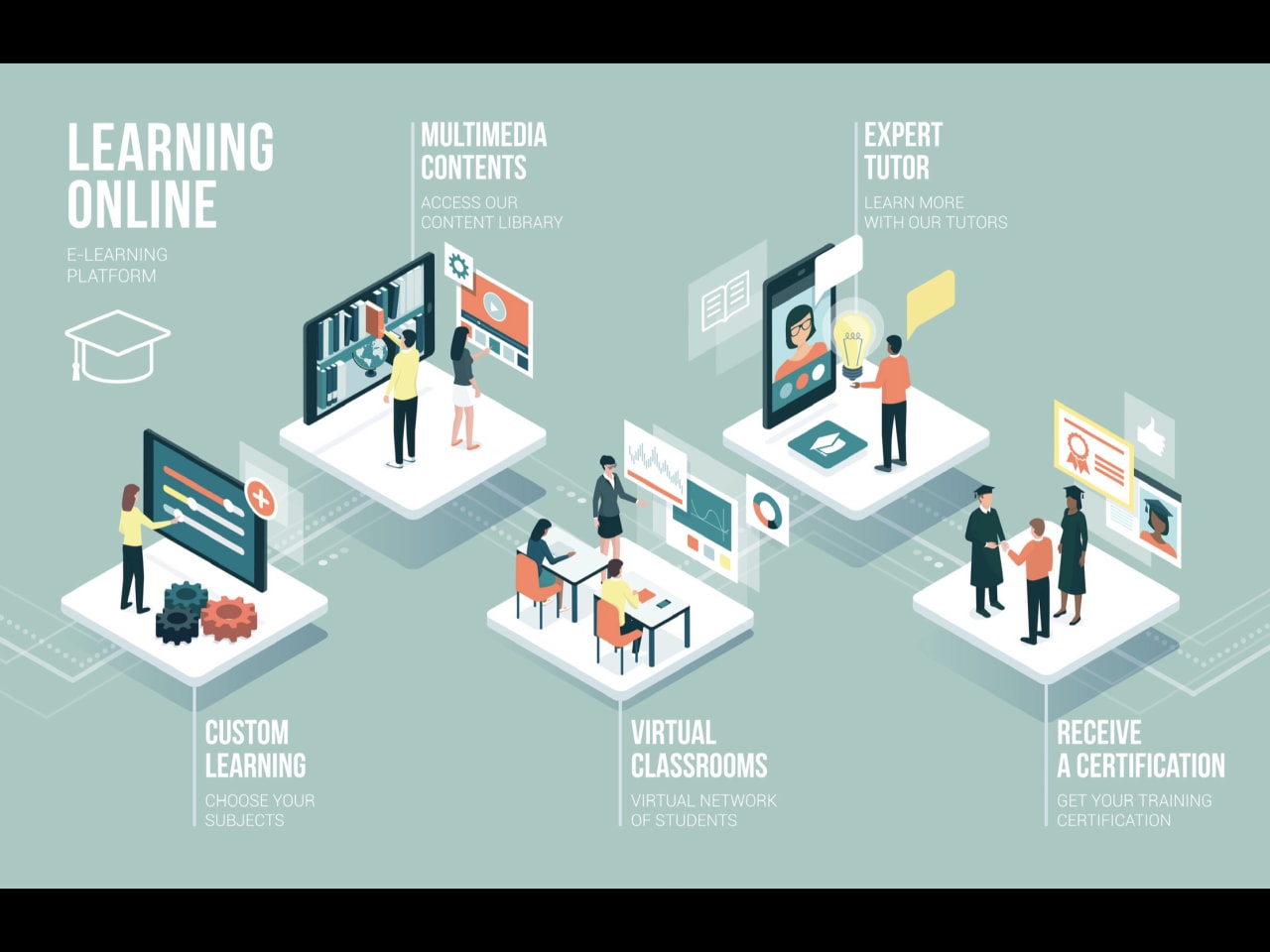
1. Learning Management Systems (LMS):
- Learning Management Systems serve as central platforms for delivering, managing, and tracking online courses and educational resources. LMS platforms allow instructors to create course materials, organize content, deliver assessments, and communicate with students.
- Popular LMS platforms include Moodle, Canvas, Blackboard, Sakai, and Google Classroom. These platforms offer features such as course modules, discussion forums, gradebooks, assignment submissions, and communication tools to support online learning activities.
2. Video Conferencing Tools:
- Video conferencing tools enable synchronous online interactions, allowing instructors and students to engage in live virtual classes, webinars, and discussions in real-time. These tools facilitate face-to-face communication, collaboration, and instruction, enhancing the sense of presence and connection in online learning environments.
- Popular video conferencing tools include Zoom, Microsoft Teams, Google Meet, Cisco Webex, and Adobe Connect. These platforms offer features such as video streaming, screen sharing, chat, and breakout rooms to facilitate interactive online sessions.
3. Content Authoring Tools:
- Content authoring tools enable instructors to create, design, and publish interactive multimedia content for online courses. These tools allow educators to develop engaging presentations, videos, simulations, and interactive activities that enhance learning experiences.
- Common content authoring tools include Articulate Storyline, Adobe Captivate, Camtasia, H5P, and Canva. These platforms offer intuitive interfaces, templates, and multimedia capabilities to create dynamic and engaging course materials.
4. Collaboration and Communication Tools:
- Collaboration and communication tools facilitate asynchronous interactions and group work among students and instructors in online learning environments. These tools enable learners to collaborate on projects, share resources, and communicate effectively outside of live class sessions.
- Examples of collaboration and communication tools include Google Workspace (formerly G Suite), Microsoft Office 365, Slack, Microsoft Teams, and Discord. These platforms offer features such as document sharing, messaging, file storage, and project management to support online collaboration.
5. Virtual Learning Environments:
- Virtual learning environments provide immersive and interactive online spaces for learning, exploration, and engagement. These environments simulate real-world settings, allowing learners to interact with digital objects, environments, and avatars in a 3D virtual space.
- Virtual learning environments include platforms such as Second Life, OpenSimulator, and Active Worlds. These platforms are used in educational settings for virtual simulations, role-playing scenarios, virtual field trips, and immersive learning experiences.
6. Gamification and Game-Based Learning Platforms:
- Gamification and game-based learning platforms integrate game elements, mechanics, and principles into educational activities to enhance engagement, motivation, and learning outcomes. These platforms leverage the power of play and competition to make learning more enjoyable and effective.
- Examples of gamification and game-based learning platforms include Kahoot!, Quizizz, Class craft, Minecraft Education Edition, and Duolingo. These platforms offer quizzes, challenges, quests, and rewards to incentivize learning and promote active participation.
7. Learning Analytics and Data Analysis Tools:
- Learning analytics and data analysis tools enable educators to gather, analyze, and interpret data on student engagement, performance, and learning behaviors in online courses. These tools provide insights into learner progress, identify at-risk students, and inform instructional decision-making.
- Learning analytics platforms include tools such as Moodle Analytics, Blackboard Analytics, Google Analytics, and Tableau. These platforms offer dashboards, reports, and visualizations to track student data, monitor learning outcomes, and optimize course design based on data-driven insights.
Challenges of Online Learning:
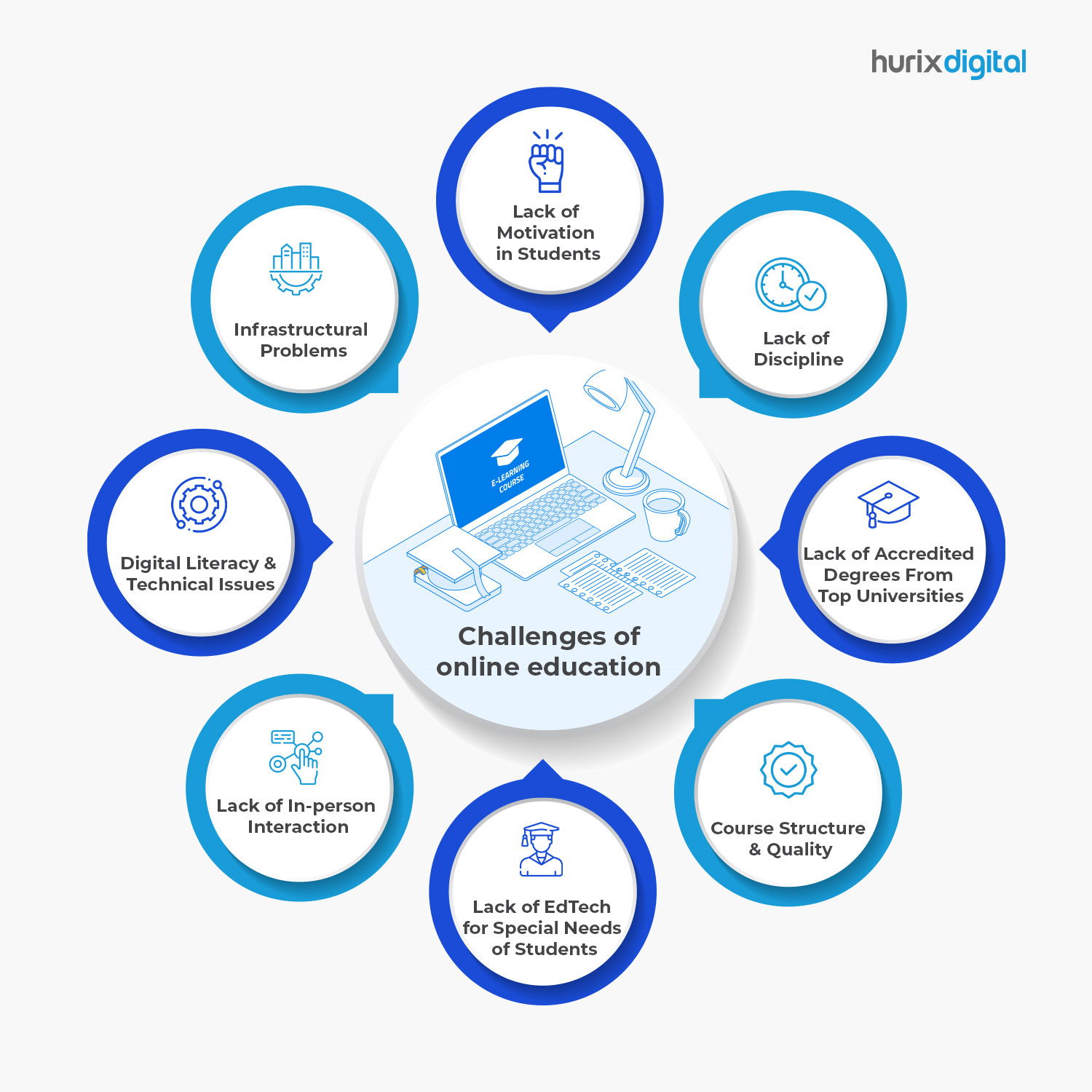
1. Technological Barriers:
- Access to reliable internet connectivity and digital devices can be a significant barrier for learners, particularly those in rural or underserved areas. Limited access to technology or inadequate infrastructure may hinder participation in online courses and activities.
- Digital literacy skills are essential for navigating online learning platforms, accessing course materials, and engaging with digital resources effectively. Learners who lack digital literacy skills may struggle to navigate online learning environments and utilize technology tools.
2. Social Isolation and Lack of Engagement:
- Online learning can be isolating, lacking the face-to-face interaction and social connections found in traditional classroom settings. Learners may feel disconnected from instructors and peers, leading to feelings of loneliness, disengagement, and decreased motivation.
- Building a sense of community and fostering peer interaction in online learning environments is essential to mitigate social isolation. However, creating opportunities for meaningful interaction and collaboration may be challenging in asynchronous or self-paced courses.
3. Self-Discipline and Time Management:
- Online learning requires self-discipline, time management, and intrinsic motivation to stay on track with coursework and complete assignments independently. Learners must manage their time effectively, set goals, and prioritize tasks to succeed in online courses.
- Without the structure of regular class meetings or face-to-face interactions with instructors, some learners may struggle to stay motivated and focused, leading to procrastination, missed deadlines, and academic challenges.
4. Quality of Instruction and Support:
- The quality of online instruction and support may vary depending on the expertise of instructors, course design, and institutional resources. Instructors must adapt teaching methods and instructional materials for online delivery, ensuring that course content is engaging, accessible, and effective.
- Providing adequate support services, such as technical assistance, academic advising, and tutoring, is essential to help learners navigate challenges and succeed in online courses. Institutions must invest in training and professional development for faculty and staff to enhance the quality of online instruction and support.
5. Assessment and Academic Integrity:
- Ensuring the integrity and validity of assessments in online courses can be challenging. Online assessments may be susceptible to cheating, plagiarism, and academic dishonesty, requiring instructors to implement strategies to uphold academic integrity.
- Techniques such as proctored exams, plagiarism detection software, and authentic assessment tasks can help mitigate academic dishonesty in online courses. However, designing assessments that accurately measure learning outcomes while preventing cheating remains a complex and ongoing challenge.
6. Equity and Access:
- Online learning may exacerbate existing inequities in access to education, particularly for marginalized or disadvantaged learners. Factors such as socioeconomic status, disability, language barriers, and geographic location can impact access to technology, digital resources, and support services.
- Institutions must address equity concerns by implementing strategies to ensure that online learning is accessible to all learners, regardless of background or circumstances. This may include providing financial assistance, technology resources, and accommodations for learners with disabilities.
7. Teacher and Learner Burnout:
- Online learning can be demanding for both instructors and learners, leading to increased stress, workload, and burnout. Instructors may face challenges such as managing multiple online courses, providing timely feedback, and adapting to new technologies and instructional methods.
- Learners may experience burnout due to the demands of self-directed learning, juggling multiple responsibilities, and navigating unfamiliar online learning environments. Balancing academic coursework with work, family obligations, and personal commitments can be overwhelming for some learners.
Future Treads in Online Learning:
Online learning is continually evolving in response to technological advancements, pedagogical innovations, and changing educational needs. As we look ahead, several emerging trends are shaping the future of online learning. Here are some key trends to watch:
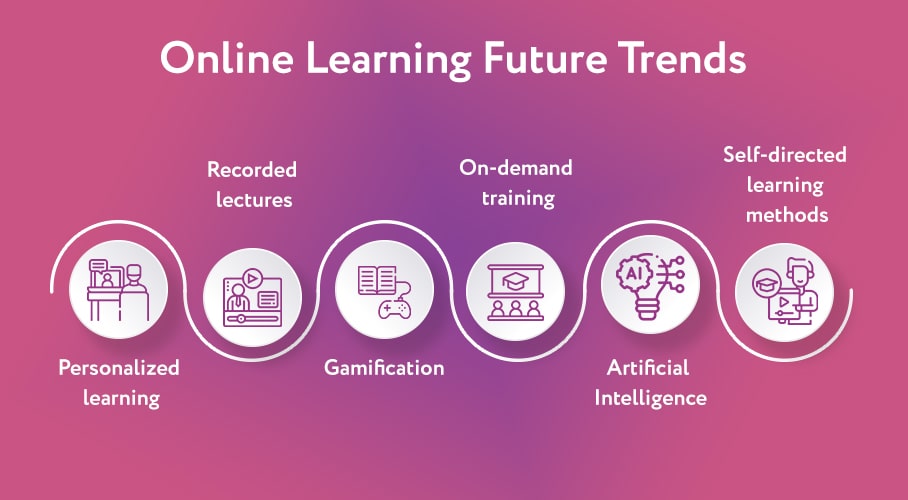
1. Artificial Intelligence (AI) and Machine Learning:
- AI and machine learning technologies are revolutionizing online learning by enabling personalized, adaptive, and data-driven approaches to instruction. AI-powered algorithms analyze learner data, identify patterns, and deliver customized learning experiences tailored to individual needs and preferences.
- AI can automate routine tasks, such as grading assessments, providing feedback, and generating personalized recommendations for learners. Machine learning algorithms can predict learner outcomes, identify at-risk students, and recommend interventions to support student success.
2. Immersive Technologies:
- Immersive technologies such as virtual reality (VR), augmented reality (AR), and mixed reality (MR) are transforming online learning experiences by providing immersive, interactive, and engaging environments for exploration and learning.
- VR and AR technologies enable learners to simulate real-world scenarios, conduct virtual experiments, and explore complex concepts in a safe and interactive manner. These technologies enhance retention, engagement, and understanding of content by providing hands-on, experiential learning experiences.
3. Microlearning and Bite-Sized Content:
- Microlearning, or the delivery of short, focused learning modules or resources, is gaining popularity as a way to deliver just-in-time learning experiences that are easily digestible and accessible on-demand.
- Microlearning modules are typically brief, targeted, and focused on specific learning objectives or skills. They allow learners to access relevant information quickly, engage in short bursts of learning, and apply new knowledge immediately in real-world contexts.
4. Social and Collaborative Learning:
- Social and collaborative learning experiences are becoming integral components of online learning environments, fostering peer interaction, knowledge sharing, and community engagement.
- Online learning platforms are incorporating social features such as discussion forums, group projects, and peer-to-peer feedback mechanisms to facilitate collaborative learning experiences. Social learning environments encourage active participation, collaboration, and the exchange of ideas among learners.
5. Data Analytics and Learning Analytics:
- Data analytics and learning analytics are playing a crucial role in optimizing online learning experiences by providing insights into learner behaviors, performance patterns, and engagement metrics.
- Learning analytics platforms analyze learner data to identify trends, track progress, and inform instructional decision-making. By leveraging data-driven insights, educators can personalize instruction, identify learning gaps, and provide targeted interventions to support student success.
6. Gamification and Game-Based Learning:
- Gamification and game-based learning strategies are being increasingly integrated into online learning environments to enhance engagement, motivation, and learning outcomes.
- Gamified elements such as points, badges, leaderboards, and rewards are used to incentivize learning, promote healthy competition, and provide feedback. Game-based learning platforms leverage game mechanics and principles to make learning more enjoyable, interactive, and immersive.
7. Personalized Learning Pathways:
- Personalized learning pathways empower learners to customize their educational experiences based on their interests, preferences, and learning goals. Online learning platforms offer adaptive learning technologies that tailor content, pacing, and assessments to meet individual learner needs.
- Personalized learning pathways enable learners to progress at their own pace, focus on areas of interest, and receive targeted support and feedback. These tailored learning experiences enhance engagement, motivation, and learning outcomes for learners of all ages and backgrounds.
8. Blockchain Technology for Credentialing:
- Blockchain technology is being explored as a secure and transparent solution for credentialing and verifying academic achievements in online learning environments.
- Blockchain-based credentialing systems enable learners to securely store and share their digital credentials, certificates, and badges in a tamper-proof, decentralized database. This ensures the authenticity and integrity of credentials, streamlining the verification process for employers, educational institutions, and other stakeholders.
CONCLUSION:
In conclusion, online learning represents a dynamic and transformative force in education, offering unprecedented opportunities to expand access, enhance flexibility, and promote lifelong learning for learners worldwide. Through technological advancements, pedagogical innovations, and evolving instructional strategies, online learning has revolutionized the way we teach, learn, and engage with educational content.
The journey through the realm of online learning has illuminated a multitude of benefits, from the flexibility to study anytime, anywhere, to the customization of learning experiences tailored to individual needs and preferences. The advent of artificial intelligence, immersive technologies, and data analytics has propelled online learning into a new era of personalized, adaptive, and interactive learning experiences that transcend traditional boundaries and empower learners to achieve their full potential.

However, alongside its many advantages, online learning also presents challenges that must be addressed to ensure equitable access, quality instruction, and meaningful engagement for all learners. Technological barriers, social isolation, and concerns about academic integrity underscore the importance of fostering inclusive, supportive, and engaging learning environments that promote collaboration, communication, and community.
As we look to the future, the landscape of online learning is ripe with possibilities, fueled by emerging trends such as microlearning, gamification, and personalized learning pathways. By embracing these trends, educators, institutions, and edtech providers can harness the transformative power of online learning to meet the diverse needs of learners, foster innovation in teaching and learning, and shape the future of education in the digital age.
In the journey towards educational excellence and empowerment, online learning stands as a beacon of innovation, accessibility, and opportunity, driving positive change and paving the way for a more inclusive, flexible, and interconnected learning ecosystem. Through collaboration, creativity, and a commitment to continuous improvement, online learning has the potential to unlock the door to a world of knowledge, inspiration, and endless possibilities for learners of all ages and backgrounds.

Comments
Post a Comment